Featured
Table of Contents
"Moreover, there's no details order for the stages of pain. Our first emotional reaction to loss could be anger and depression.
And our emotions can can be found in waves of intensity. In the beginning, our emotions can be frustrating. Over time, the intensity is likely to decrease although there may be moments when it's simply as fresh and overpowering as it was at. Many individuals get frustrated with themselves due to the fact that they assume they're grieving too long.
It depends on the person, and it depends on the loss. And keep in mind that there's never a time when we're totally "done" with pain; we just learn how to make adjustments to the loss.
Pain is a complicated procedure that differs from person to person. The 5 phases of sorrow rejection, temper, negotiating, depression, and acceptance are a helpful structure for considering sorrow, yet it doesn't mean we'll undergo every stage. We can experience these aspects of sorrow at different times, and they do not take place in one certain order.
The Healing Process for High-Achieving Individuals in Therapy
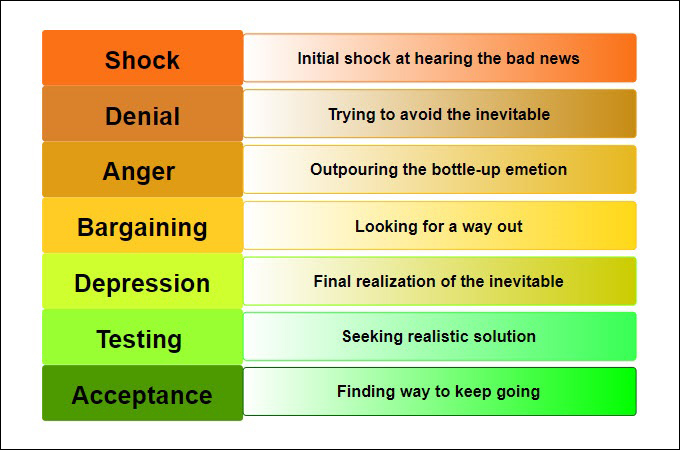
You just underwent a separation. You shed your job. You're incapable to acquire the goal you have actually been functioning toward. Believe it or otherwise, every one of these are some kind of sorrow or the experience of managing loss. As we function our method via experiences like these, we're likely to go through various phases or feelings from rejection and rage to unhappiness and animosity.
We'll likewise check out common misconceptions regarding pain and ideas for handling loss. Allow's dive in. Before we study the five stages of pain, it's valuable to comprehend what pain is. Put simply, grief is the experience of managing loss. And it's experienced by everyone in a distinctively personal method.
Grief can also come from any kind of changes we experience in life, such as moving to a new city or school or transitioning into a brand-new age team. The truth is that we all experience a certain level of grief throughout our lives. While some losses are much more intense than others, they are no much less real.
Unburdening Perfectionist Parts in High-Achievers

Lots of researchers have actually dedicated years to studying loss and the feelings that accompany it. Among these specialists was Elisabeth Kubler-Ross, a Swiss-American psychoanalyst. She interviewed over 200 individuals with terminal diseases and recognized 5 typical phases people experience as they face the realities of their upcoming fatality: rejection, anger, bargaining, anxiety, and approval.
Although Kubler-Ross's work concentrated on sorrow feedbacks from individuals that are passing away, several of these stages can be related to pain across any type of kind of loss. It is necessary to keep in mind that these phases are not direct, and they're not a prescription. Not every person experiences every phase, which's fine. We may seem like we approve the loss at times and afterwards relocate to one more phase of pain once again.
When Career-Driven Individuals Experience Mental Health Concerns
Similarly, just how much time we spend navigating these phases differs from one person to another. It might take us hours, months, or longer to process and recover from a loss. Keeping that in mind, allow's take a more detailed look at each of the 5 stages of pain: For lots of people, denial or making believe the loss or modification isn't occurring is typically the initial feedback to loss.
Numerous people will certainly additionally experience temper as part of their despair. In various other words, temper is a means to conceal the lots of emotions and pain that we're carrying as a result of the loss or change.
Also though our sensible mind understands they're not responsible, our feelings are intense and can conveniently bypass reasonable thinking. We also may blast inanimate items, complete strangers, buddies, or relative. We may really feel mad at life itself. While we often believe that rage is an adverse emotion and something to be avoided whatsoever costs, it really offers an objective and is an essential component of healing.
Negotiating is a phase of despair that assists us hold onto hope during extreme psychological pain. It's an effort to aid us restore control of a circumstance that has made us really feel extremely at risk and defenseless. It's additionally one more method to help us postpone needing to deal directly with the unhappiness, confusion, or pain.
Overcoming Professional Mastery with Emotional Pain
Anxiety is commonly likened to the "quiet" stage of grief, as it's not as energetic as the temper and negotiating stages. This can result in intense feelings of unhappiness, despair, and sadness. Signs and symptoms of depression can manifest themselves in various ways. For example, we could feel foggy, heavy, exhausted, overwhelmed or distracted.
Simply like the other phases of sorrow, anxiety is experienced in different means. Rather, it's a natural and appropriate action to sorrow.
Rather, As an example, if we're grieving the death of an enjoyed one, we may be able to share our appreciation for all the remarkable times we spent with them. Or if we're going through a separation, we might say something like, "This truly was the most effective thing for me." In this stage, we might become extra comfortable connecting to friends and family, and we might even make new partnerships as time takes place.
Below are 3 usual false impressions concerning grieving that we could believe when we consider our own or somebody else's means of grieving: One of the most typical false impressions concerning grieving is that every person undergoes it similarly. As we have actually developed, regreting is an one-of-a-kind trip that is various for every person.
Transforming Medical Trauma Through EMDR in Your Area
So if you ever before locate yourself thinking, "I'm doing it wrong," attempt advising on your own that "there's no right or incorrect method of grieving."Moreover, there's no details order for the stages of pain. Our initial emotional reaction to loss may be temper and clinical depression. This doesn't imply that we're not regreting appropriately.
And our emotions can can be found in waves of strength. Initially, our emotions can be frustrating. In time, the strength is most likely to decrease although there may be moments when it's equally as fresh and overpowering as it was at first. Many individuals get frustrated with themselves since they think they're regreting too long.

Table of Contents
Latest Posts
Treatment Results with Psychodynamic Therapy in Clinical Practice
What Makes Specialized IFS Therapy Transformative
How Embodied Healing is Essential in Food Relationship Healing After Traumatic Experiences
More
Latest Posts
Treatment Results with Psychodynamic Therapy in Clinical Practice
What Makes Specialized IFS Therapy Transformative
How Embodied Healing is Essential in Food Relationship Healing After Traumatic Experiences